
Industries We Work With
How Experience-Driven Marketing Creates Value Across Industries
By 22 Marketing Studio
Behind Every Great Experience Is a Great Strategy.
Executive Summary
Experience-driven marketing is not limited to tourism and hospitality.
Across industries, people make decisions based on more than products, services, or price. They evaluate trust, reputation, expectations, expertise, emotion, and the experience they believe a brand will deliver.
This is especially true when customers are asked to make a decision before experiencing the product or service itself.
A traveler chooses a destination before arriving.
A guest books a resort before checking in.
A diner chooses a restaurant before sitting at the table.
A patient chooses a healthcare provider before meeting the medical team.
A family evaluates a property before living in it.
A client chooses a professional service provider before experiencing their expertise.
Different industries. Different audiences. Different customer journeys.
But one common challenge:
How do you build enough trust and desire for someone to choose your brand before they experience it?
The answer is the same across every industry: perception becomes the product until the real experience begins.
At 22 Marketing Studio, we have spent more than 17 years helping experience-driven brands close that gap through our Experience Strategy Framework™ applied across strategy, content, branding, digital experiences, and performance marketing.
Our work spans hotels and resorts, tourism destinations, restaurants, tour operators, medical tourism, professional services, real estate, and lifestyle brands.
Different industries, different audiences, but the same strategic foundation.
The Experience-Driven Business Landscape
Sources: World Travel & Tourism Council (WTTC), OECD Tourism Trends & Policies 2026, European Commission – Tourism Transition Pathway.
Experience-driven brands operate in very different markets, but they share an important characteristic: the customer often makes a decision based on perception before experiencing the actual product or service.
This makes marketing more than a promotional tool.
It becomes part of the experience itself.
A hotel website creates expectations before arrival.
A restaurant’s photography influences the atmosphere people imagine before making a reservation.
A tour operator’s content helps travelers visualize the adventure before booking.
A healthcare provider’s communication can determine whether a patient feels confident enough to take the next step.
A real estate brand can sell a lifestyle before someone ever walks through the property.
A professional service firm can establish credibility before the first meeting.
In each case, marketing helps answer the same fundamental questions:
Can I trust this brand?
Is this experience right for me?
Will it deliver what I expect?
Why should I choose it over the alternatives?
This is where experience-driven marketing becomes particularly valuable.
Hotels & Resorts
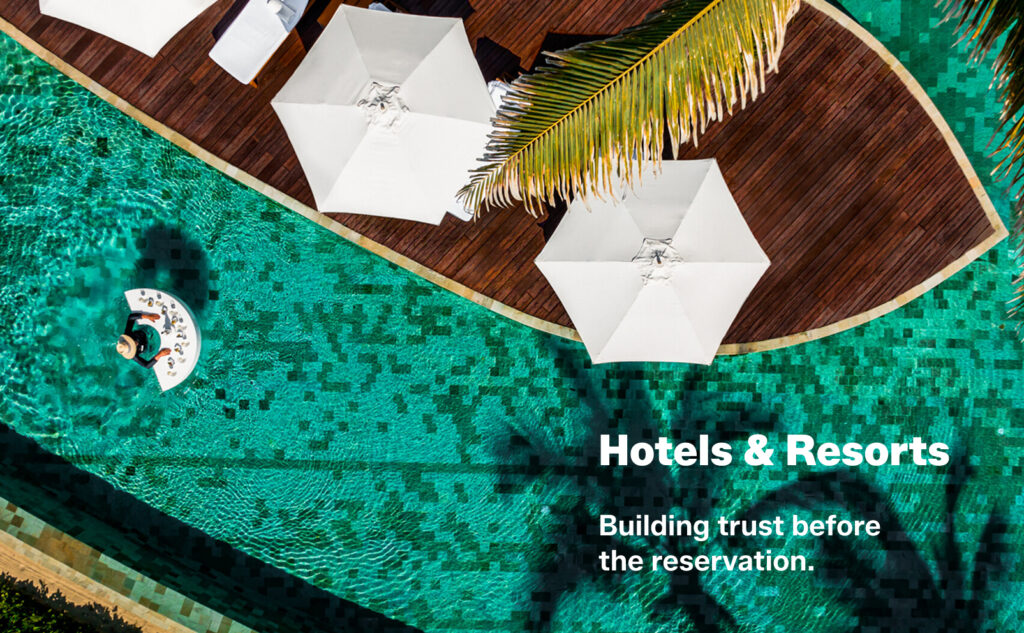
Building trust before the reservation.
Hotels and resorts are among the clearest examples of experience-driven brands.
Guests rarely choose a property based on a room alone.
They are choosing a vacation, a business trip, a celebration, a wellness retreat, a meeting, or a memory they have not experienced yet.
That means hotel marketing needs to communicate more than amenities and rates.
It needs to create a clear expectation of the experience.
Visual storytelling, brand positioning, reputation, destination context, content, digital experiences, and communication all contribute to the decision-making process.
For hotels and resorts, effective marketing helps transform:
A room into a stay.
A property into a destination.
An amenity into an experience.
A reservation into anticipation.
Featured Project: Velas Resorts Meetings & Incentives
Tourism Destinations
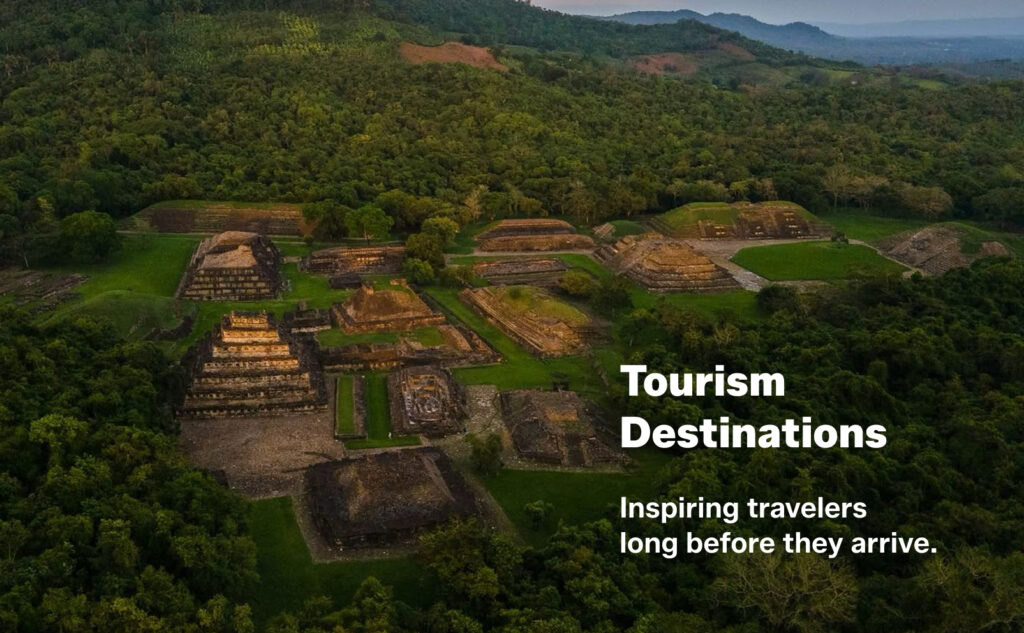
Inspiring travelers long before they arrive.
Destinations compete for attention long before travelers begin comparing hotels or booking activities.
A destination is not a single product.
It is a collection of places, experiences, culture, gastronomy, landscapes, people, and stories.
Successful destination marketing helps travelers imagine themselves there.
It creates desire before an itinerary exists and establishes an emotional connection before a flight is booked.
This requires a broader perspective than promoting individual attractions.
Destination marketing needs to answer:
Why here?
Why now?
What will I experience?
What will make this trip different from another destination?
The strongest destination brands do not simply promote places.
They create a reason to want to be there.
Featured Project: GS Tours – Ruta Tajín | Punta Mita HOA
Restaurants
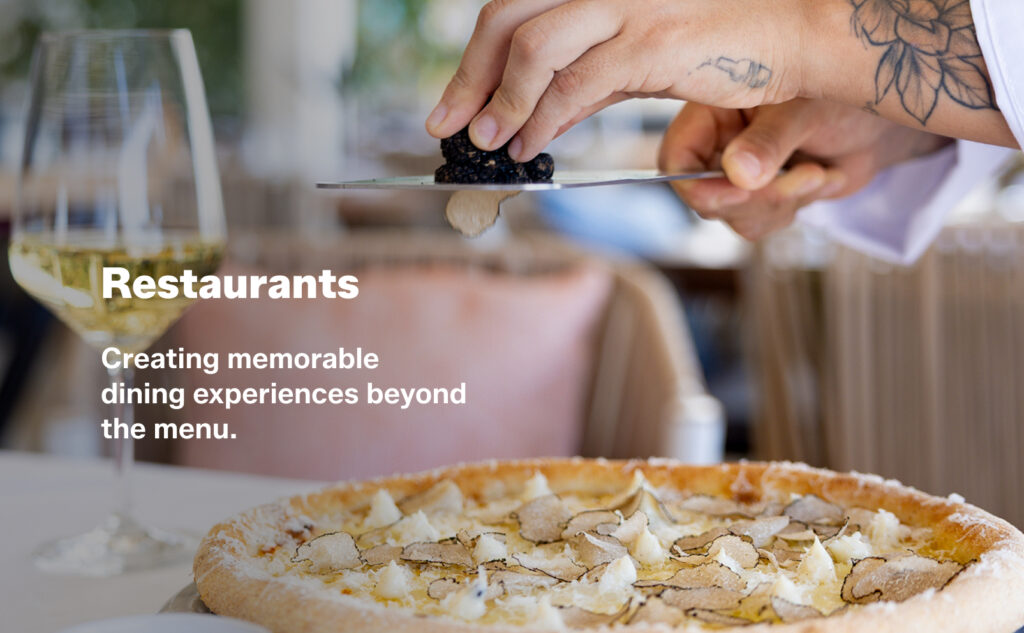
Creating memorable dining experiences beyond the menu.
Restaurant marketing often begins with food photography.
But the experience begins before the first dish reaches the table.
People choose restaurants for celebrations, conversations, business meetings, date nights, reunions, atmosphere, design, service, and the feeling they expect to have while they are there.
Food remains at the center.
But it is only one part of the experience.
For restaurants, strategic marketing connects gastronomy with atmosphere, identity, occasion, storytelling, and community.
A strong restaurant brand answers a simple question:
What kind of experience will I have here?
The answer goes far beyond the menu.
Featured Projects: Bagatelle Los Cabos | Mesón Ibérico
Tour Operators
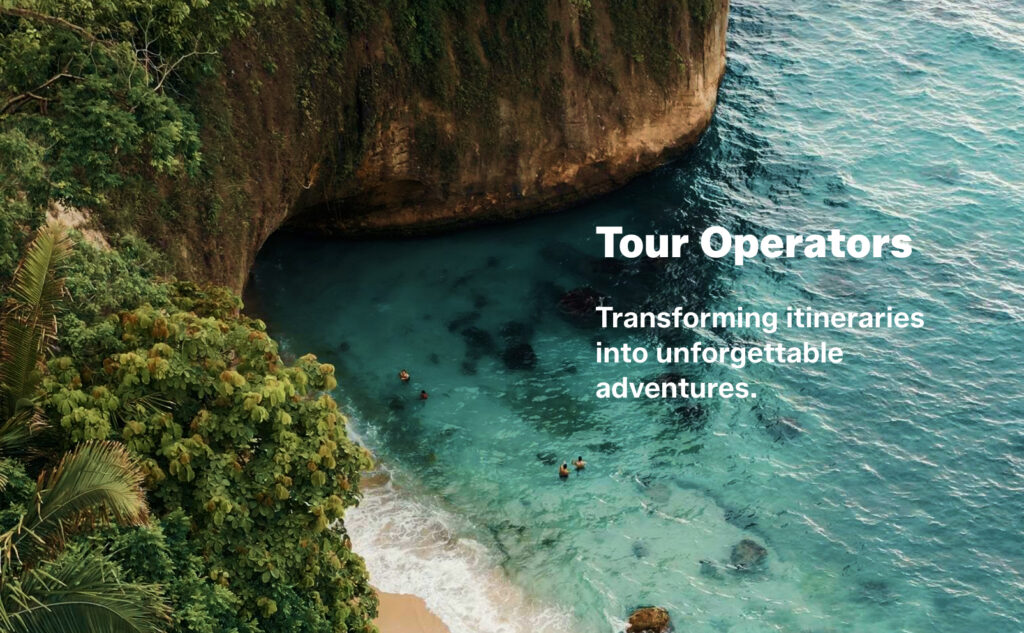
Transforming itineraries into unforgettable adventures.
Tour operators sell something that cannot be fully evaluated before purchase.
The traveler is buying an experience that exists in the future.
That makes imagination one of the most powerful tools in tour operator marketing.
An itinerary may describe where a traveler will go.
Effective marketing helps them imagine how it will feel.
Whether it is diving, cultural exploration, gastronomy, adventure, nature, or wellness, the objective is to move communication beyond logistics and into experience.
Instead of simply communicating:
Where you go.
What is included.
How long it takes.
Experience-driven marketing asks:
What will you discover?
Who will you become part of the journey with?
What story will you take home?
That shift can transform an itinerary into something people genuinely want to experience.
Featured Projects: NEA Good Dives | GS Tours
Medical Tourism
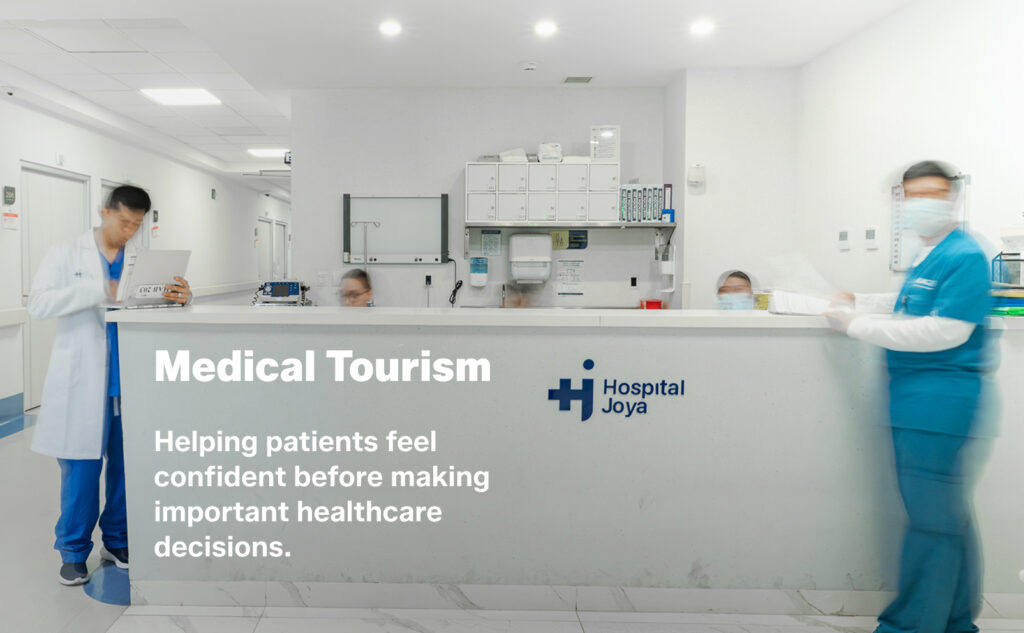
Helping patients feel confident before making important healthcare decisions.
Medical tourism combines two highly personal decisions: choosing healthcare and traveling to receive it.
Patients are not simply evaluating facilities or medical procedures.
They are evaluating expertise, reputation, safety, communication, technology, accessibility, and trust.
The patient journey can also be longer and more complex than in many other industries.
Patients may research providers for weeks or months before making contact.
During that time, every digital touchpoint matters.
A website, social media profile, patient testimonial, visual identity, educational content, and communication can all influence whether a patient feels confident enough to take the next step.
For medical tourism brands, marketing should not create unnecessary pressure.
It should create clarity, credibility, and confidence.
Featured Project: Grupo Médico Joya
Professional Services

Building trust through expertise, credibility, and client relationships.
Professional services may not immediately appear to belong within experience marketing.
But the customer journey is deeply experience-driven.
Clients often choose lawyers, accountants, consultants, architects, notaries, and other professional providers based on perception long before experiencing the service itself.
They evaluate expertise.
They look for credibility.
They consider reputation.
They want to understand whether the provider is capable of handling something important to them.
In these industries, marketing is not simply about visibility.
It is about making expertise understandable and building confidence before the first conversation.
A strong professional services brand communicates:
We know what we are doing.
We understand your needs.
You can trust us with what matters to you.
Featured Project: Notaría No. 29
Real Estate
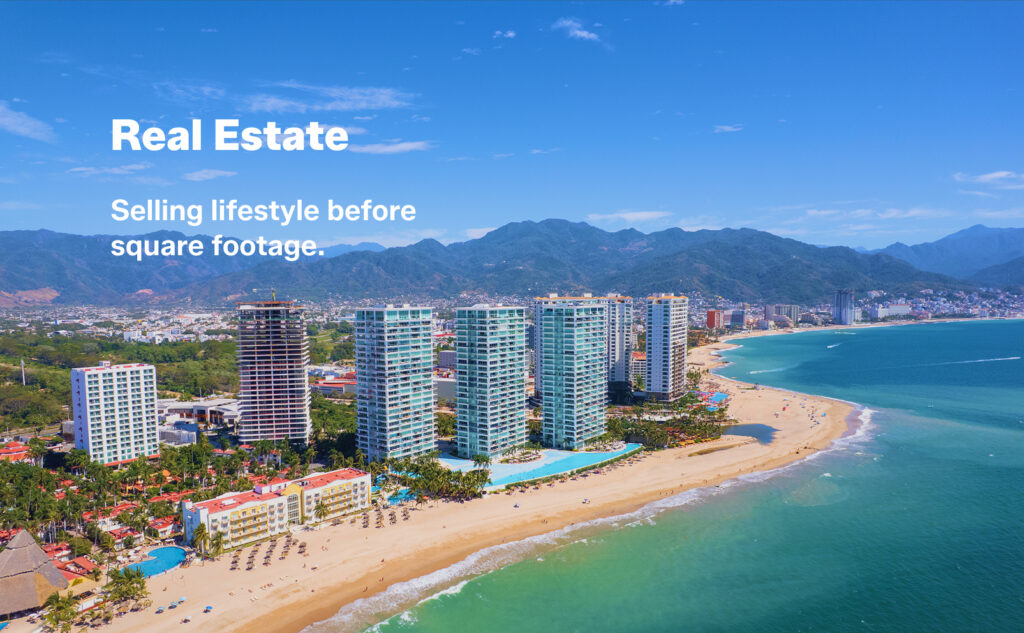
Selling lifestyle before square footage.
Real estate marketing has traditionally focused on properties, specifications, locations, and price.
But buyers are rarely purchasing square footage alone.
They are purchasing a future.
A home.
An investment.
A lifestyle.
A sense of belonging.
A place to spend time with family.
For lifestyle-driven developments, marketing needs to help potential buyers visualize what life could look like after the purchase.
That means communicating not only the property itself, but also the environment, community, location, design, amenities, and emotional value surrounding it.
The strongest real estate brands do not simply show properties.
They make people imagine themselves living there.
Featured Project: Bonito Beach Properties | Collaboration with Donner & Asociados
Lifestyle Brands
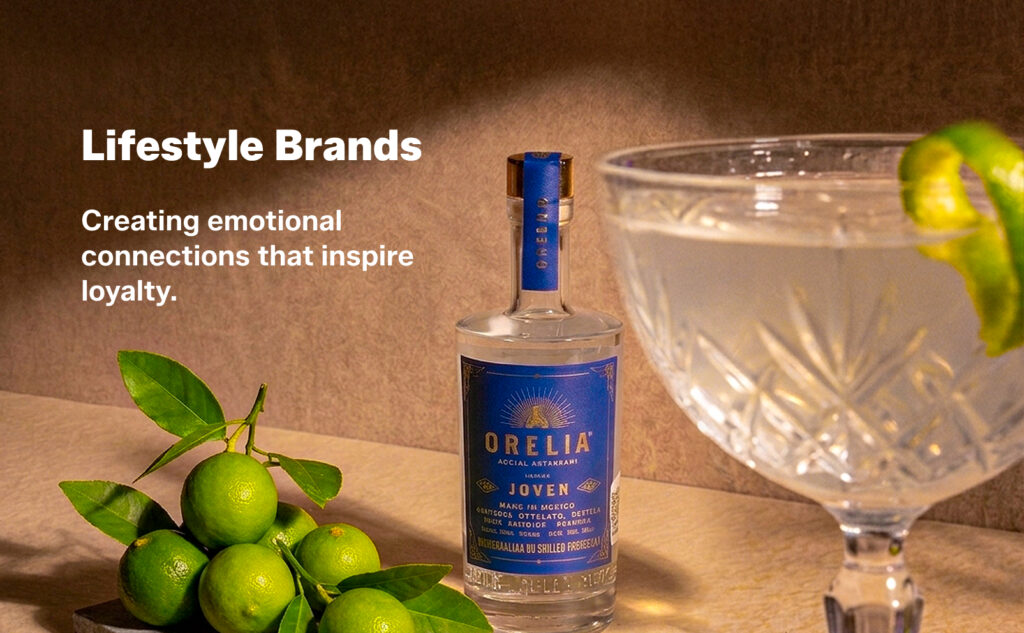
Creating emotional connections that inspire loyalty.
Lifestyle brands are built around identity.
People do not always choose them because they need a particular product.
They choose them because the brand represents something they value, believe in, or want to be associated with.
This makes emotional connection particularly important.
From spirits and design to fashion, wellness, beauty, and other lifestyle categories, the brand experience extends beyond the product.
Visual identity, storytelling, social media, packaging, events, partnerships, and customer interactions all contribute to the perception of the brand.
The objective is not simply to be remembered.
It is to become meaningful.
When people see themselves in a brand, loyalty becomes more than a purchase decision.
It becomes a relationship.
Featured Projects: Orelia Mezcal | Melin Castro Design
Different Industries. One Strategic Foundation.
The industries we work with may look very different on the surface.
A resort is not a medical provider.
A restaurant is not a real estate development.
A tour operator is not a professional service firm.
Yet the marketing challenge often begins in the same place:
People must decide whether to trust and choose a brand before they experience it.
That is why experience-driven marketing cannot rely on a one-size-fits-all formula.
The strategy must adapt to the audience, the industry, the customer journey, the business model, and the experience the brand wants to create.
The tactics may change.
The channels may change.
The message may change.
But the strategic questions remain.
Who are we trying to reach?
What matters to them?
What makes this brand different?
What experience are we promising?
How do we build trust before the decision?
How do we make every touchpoint reinforce that promise?
This is where strategy becomes the connection between the business and the experience.
Why Industry Expertise Matters
Understanding marketing is important.
Understanding the industry is equally important.
Every industry has its own customer behaviors, decision cycles, competitive pressures, language, expectations, and definitions of value.
A strategy that works for a luxury resort cannot simply be copied and applied to a medical tourism provider.
A restaurant does not communicate like a real estate development.
A tour operator does not build trust in the same way as a professional service firm.
Experience-driven marketing requires both:
Strategic thinking + industry understanding.
The goal is not to create a different strategy for the sake of being different.
The goal is to understand what makes each business unique and build a strategy around that reality.
From Business Objectives to Meaningful Experiences
At 22 Marketing Studio, our approach begins with the business.
Before creating content, campaigns, or advertising, we seek to understand the objectives behind them.
What is the organization trying to achieve?
Who does it need to reach?
What position should the brand own?
What does the audience need to believe?
What experience should the brand create?
From there, strategy informs communication, content, creative execution, digital experiences, and performance marketing.
This is the philosophy behind our Experience Strategy Framework™.
Different industries may require different applications.
But the objective remains the same:
Turn business objectives into meaningful experiences that connect brands with people.
Key Takeaways
- Experience-driven marketing applies far beyond tourism and hospitality.
- Different industries require different strategies, messages, and customer journeys.
- Customers often make decisions based on trust and perception before experiencing the product or service.
- Industry knowledge helps brands communicate with greater relevance and credibility.
- Marketing should create expectations that the actual experience can deliver.
- Every touchpoint contributes to how a brand is perceived.
- Strategy provides the foundation that connects business objectives with customer experience.
Executive Insight
After working with many experience-driven brands, one thing has remained consistent:
No two businesses are exactly alike.
The audiences are different.
The challenges are different.
The customer journeys are different.
But the need for a clear strategy is universal.
The role of marketing is not simply to make a brand visible.
It is to make the brand meaningful to the right people, at the right moment, with the right message—and to create expectations that the experience can deliver.
That is why we believe experience marketing should never begin with a channel.
It should begin with understanding.
Different industries. Different audiences. One strategic approach.
Behind Every Great Experience Is a Great Strategy.
Carlos Chávez Correa
CEO | 22 Marketing Studio
About 22 Marketing Studio
22 Marketing Studio is a strategic marketing consultancy specializing in Tourism, Hospitality & Experience Marketing.
For more than 17 years, we have partnered with hotels, tourism brands, restaurants, healthcare organizations, real estate developments, and experience-driven businesses to build stronger brands through strategy, communication, content, and performance marketing.
Because behind every great experience is a great strategy.
Frequently Asked Questions
What industries does 22 Marketing Studio work with?
22 Marketing Studio works with experience-driven brands across hotels and resorts, tourism destinations, restaurants, tour operators, medical tourism, professional services, real estate, lifestyle brands, and related industries.
What is experience-driven marketing?
Experience-driven marketing focuses on the complete relationship between a brand and its audience. It considers how people discover, evaluate, choose, experience, and remember a brand—not simply how a product or service is promoted.
Why do different industries need different marketing strategies?
Every industry has different audiences, customer journeys, decision-making processes, competitive environments, and expectations. While the strategic foundation may be similar, the execution needs to reflect the realities of each business and its customers.
Can experience marketing apply outside tourism and hospitality?
Yes. Any business where perception, trust, emotion, expertise, or anticipation influence the purchase decision can benefit from an experience-driven approach. This includes healthcare, professional services, real estate, restaurants, lifestyle brands, and many other categories.
Why is industry knowledge important in marketing?
Industry knowledge allows marketers to understand the specific behaviors, expectations, challenges, and opportunities that influence a customer’s decision. Combined with strategic marketing expertise, it helps create communication that is more relevant and credible.
How does 22 Marketing Studio approach different industries?
We begin with strategy rather than tactics. We first seek to understand the business, audience, positioning, objectives, and desired experience. From there, we develop the communication, content, creative, digital, and performance initiatives needed to support those objectives.